
Innovations In Weighing Machinery
Elisabeth Skoda spoke to several companies in the weighing-packing segment about the ways in which innovation is responding to the market's needs.
In these pressurised economic times, cutting costs is on everybody's agenda. Torsten Giese, marketing manager at Ishida Europe, a world leader in multihead weighing machines and complete weighing and packing line solutions, has noticed an increasing trend towards cost reduction.
Cost efficiency
"Everybody wants to reduce costs, and machine accuracy can help to do so. For example, when packing a Walkers crisp bag, the target weight has to be set higher to make sure there isn't too little content in the bag. The more accurate the weighing machine is, the more money can be saved. Just saving a tiny amount in each bag can amount to big cost savings in a big batch. Small improvements in accuracy make big savings," he explains.
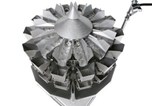
Ishida has recently developed a linear multihead weigher for the high speed weighing of high-value, small target weight applications down to 3g, such as coated nuts and confectionery. The design of the CCW-R-112PL features feeder troughs arranged in a straight line with short drop distances, particularly appropriate for handling fragile products such as sugar coated confectionery or chocolate coated mini biscuits.
Part of the Ishida R series of multihead weighers, the CCW-R-112PL features advanced Ishida technology that delivers high speeds, excellent accuracy and efficiency levels close to 100 per cent. This incudes Pulse Width Modulation (PWM), a high speed 5-stage digital filter, and a new combination calculation algorithm using Field Programmable Gate Array (FPGA) Technology.
"This weigher is one of several models from Ishida Europe which have been specifically developed for the fast and accurate weighing of small target weights," Mr Giese says.
Ishida Europe has also further extended its range of solutions for meat and poultry weighing and packing with the introduction of a new Screw Feeder multihead weigher featuring 5-litre hoppers. Screw Feeder weighers have allowed the fully automatic handling of fresh, sticky products which cannot be moved by feeder vibration, and where manual product feeding is not economically viable. The Ishida Screw Feed design utilises the familiar circular multihead weigher layout but incorporates unique rotating corkscrews to replace the traditionally used radial feed troughs. These provide a powerful, controlled and fully automatic product feed to the pool and weigh hoppers.
Optimum use of resources
Bosch Packaging Technology is one of the leading suppliers in the field of processing and packaging technology, developing and producing complete solutions for the pharmaceutical, food and confectionery industries. Johanna Marquette, marketing manager, echoes the point about the market's need for optimum use of resources and high efficiency.
"Lines and machines need to run at high speeds with as little downtime as possible while using less energy and generating little waste. One such example from Bosch is a new chewy candy production line, featuring the continuous dosing system BDK 2000 A and the crystalliser BZK 1000 B, that gives manufacturers energy savings of up to 60 per cent compared to other methods of candy production. This also answers consumer and retailer demand to integrate more sustainable processing and packaging," she explains.
In addition, product safety has been topical in the past and will continue to be so in 2013. As a result, satisfying regulations will play a much stronger role in developing packaging machinery with the latest hygienic design standards.
"For example, our new bar line is a seamless system particularly designed for increased hygiene standards. It includes components such as the DCI distribution station, which allows operators to remove the belt in less than 20 minutes for quick and easy cleaning," she explains.
Savings thanks to weighing precision
Lantech is one of the biggest stretch wrap manufacturers in the world. Derek Jones, the company's senior product marketing manager, agrees that reducing cost is a key market driver in the industry.
"Cost reduction, be it labour, film or transportation costs, is a massive driver. Controlling shipping costs can help companies to save a significant amount of money. If you weigh every load before you ship it, you will ensure that what you are being charged by the transportation company is exactly what it should be. Most people typically overestimate when they wrap and ship a load. They typically estimate 5-7 per cent more than the actual weight. By weighing every load you know exactly what you should be charged," Mr Jones explains.
"Lantech's EZ Weigh Integrated scale, which is available on all of the company's Q Semi-Automatic stretch wrappers, was released last November and has been a huge success."
Automation can also help to drive down costs, as Mr Jones points out: "We can support the reduction of labour costs by increasing automation in our customers' stretch wrapping processes. If they are hand wrapping, simply automating to a semi-automatic stretch wrapper will boost productivity and reduce film costs based on consumption. If they already have a stretch wrapper, upgrading to a XT Cut and Clamp will allow the operator to stay on the fork truck and save two minutes of labour per load," he is proud to point out.
Increased demands on machinery
Georg Aneglov, business development manager for weighing technology at Siemens Industry Automation has noticed that demands on machinery steadily increase with processes becoming more complex.
The Siemens Industry Automation Division is s leading supplier of innovative and environmentally friendly products and solutions for industrial customers. It offers end-to-end automation technology and industrial software, solid vertical-market expertise, and technology-based services.
"We have noticed an increased demand for higher precision. Raw materials are getting scarcer and more expensive, and increasing precision in weighing means reduced production costs and improved quality. The capability for self diagnosis and data continuity is also becoming more and more important. Customers expect intelligence from the systems they use, so predictive diagnosis and error information are crucial to reduce downtime. Data continuity is necessary as modern users require data and measurements to be available at all times in real time," he says. "Systems have to become more and more flexible in order to satisfy customer demands."
Another trend, according to Mr Aneglov, is the demand for greater flexibility of weighing systems with a focus on scalability, i.e. the possibility to extend systems at any time in retrospect. Usability, i.e. high performance systems that are easy to use, are also key, as well as connectivity - the capability of systems to be integrated into existing automation. Finally there is applicability, meaning that systems can be inserted into various applications.
In order to meet these demands, Siemens recently launched a versatile weighing module for its Simatic S7-1200. Siwarex WP231 is the first weighing module for this control and is suitable for monitoring filling levels in silos and bins and for use with goods being weighed on platform scales. The new model is intended for industries requiring a high level of measurement accuracy, such as the food and beverage, pharmaceutical and chemical industries. Furthermore, it is suitable for use in explosive atmospheres.
Innovations in vision inspection
Olmec Ltd is a vision systems integrator with core competencies in industrial vision, mechanical engineering and controls systems. The company specialises in the supply and installation of high performance vision systems into existing, new and OEM machinery processes.
Robert Pounder, technical director at Olmec, highlights quality and cost control as important market drivers. "Customers expect high quality products. Vision inspection can help here. The use of machine vision means that customers are implementing these systems to deliver quality assurance. Vision inspection systems are being implemented at an increasing rate as they afford a cost saving, whilst in many cases enhancing the levels of checks a product is subject to. Therefore Olmec has seen an increase in demand. Development of lower cost imaging technologies also means that new applications are becoming viable which previously have been out of reach," Mr Pounder explains.
In order to react to industry demands, Olmec recently introduced Quality Station.
"The introduction of our new Quality Station product is aimed at delivering a customised vision system structured around a standard product in order to help keep vision system costs down. As a self-contained unit which includes an integral transport system and reject mechanism, it can be added to a production line with no disruption, in much the same way as a check weigher. Although the framework of the Quality Station is constant, we can choose the cameras, lighting and configure the software in order to meet the individual application. In addition, it is fully tested on the customer's products before it is delivered to make sure that it achieves the required result," Mr Pounder concludes.
Protection from product recalls
Another challenge for the weighing and packing machinery industry is pressure from increasingly stringent government legislation and industry standards to eliminate the threat of contamination of food from foreign bodies.
One big player in this field is Mettler-Toledo. The company develops, produces and markets precision instruments worldwide. It is one of the largest suppliers of weighing and quality control systems in the world, whose products are used in laboratories as well as industrial processing and food retailing applications.
"To retain access to the most lucrative European markets, ensure safety for consumers, and protect themselves from reputation-damaging product recalls owing to contamination, food manufacturers must comply with food safety laws and be certified to industry standards," explains Neil Giles, marketing and communications manager at the Mettler-Toledo Product Inspection Division. "A Critical Control Point (CCP) must be established to ensure that the product is free from contamination to maximise consumer safety."
To respond to food safety guidelines, manufacturers establishing CCPs on their production lines are integrating product inspection systems, such as metal detectors and x-ray inspection machines to identify and remove foreign body contamination from the manufacturing process. Advanced metal detection systems are capable of inspecting food for contamination from ferrous and non-ferrous metals and non-magnetic stainless steel even in products with high moisture content or packaged in metallised film. X-ray inspection equipment can identify foreign bodies including metal, glass, stone, bone fragments, high-density plastics and rubber and can inspect for other quality defects, such as seal integrity, fill level and missing components. The selection of technology will depend on the outcome of the HACCP audit.
"For example, if the most likely form of contamination on the production line is from metal, then a metal detector will be the most appropriate system for the CCP. If the contaminant threat comes from glass or bone, then an x-ray system is more suitable. Product inspection systems are increasingly being fitted with automatic rejection devices to minimise the risk of contamination reaching consumers and to enhance throughput speed and efficiency. These are capable of responding to information from the detector to remove contaminated products from the line without affecting line speed," Mr Giles says.
Technology capable of inspecting portion control of the packaged product, such as checkweighers, is increasingly used by brand owners and manufacturers to eliminate unnecessary product waste. Checkweighers are capable of precision weighing at high throughput speeds to identify over- and under-weight products and to remove them from the manufacturing process. Checkweighing systems also enable manufacturers to detect adverse trends in product overfill, allowing them to adjust filling machines to minimise wasteful product giveaway. This protects profits and boosts efficiency.
Mettler Toledo Safeline X-Ray has recently launched its next generation of x-ray technology, the X3310. "The system offers the same level of detection power as traditional technology while reducing energy consumption by 20 per cent, optimising food safety and simultaneously maximising manufacturing efficiency and profitability for brand owners," says Mr Giles.
"The Profile Select metal detector developed to enhance metal detection in wet and conductive products was recently launched by Mettler-Toledo Safeline Metal Detection. Traditional metal detectors utilised Tuned Frequency Technology, which could be configured to a limited number of operating frequencies to address specific products, restricting flexibility.
In addition, Mettler-Toledo Garvens recently advanced its XS1, the most precise checkweighing system to date. Designed to weigh small and lightweight packages, such as those used for cosmetic and pharmaceutical products, at high throughput speeds, the system can help manufacturers minimise the number of over- and underweight products, to reduce waste and save production costs.
Source: Mettler-Toledo